
Survey of water heaters, piping and safety
We check storage water heaters, piping, safety group, pressure reducers, check valves, expansion vessel, power supply, leaks and readiness for safe operation.
We work carefully with premium equipment and finished interiors: the task is to understand what needs repair, maintenance, replacement or adjustment.
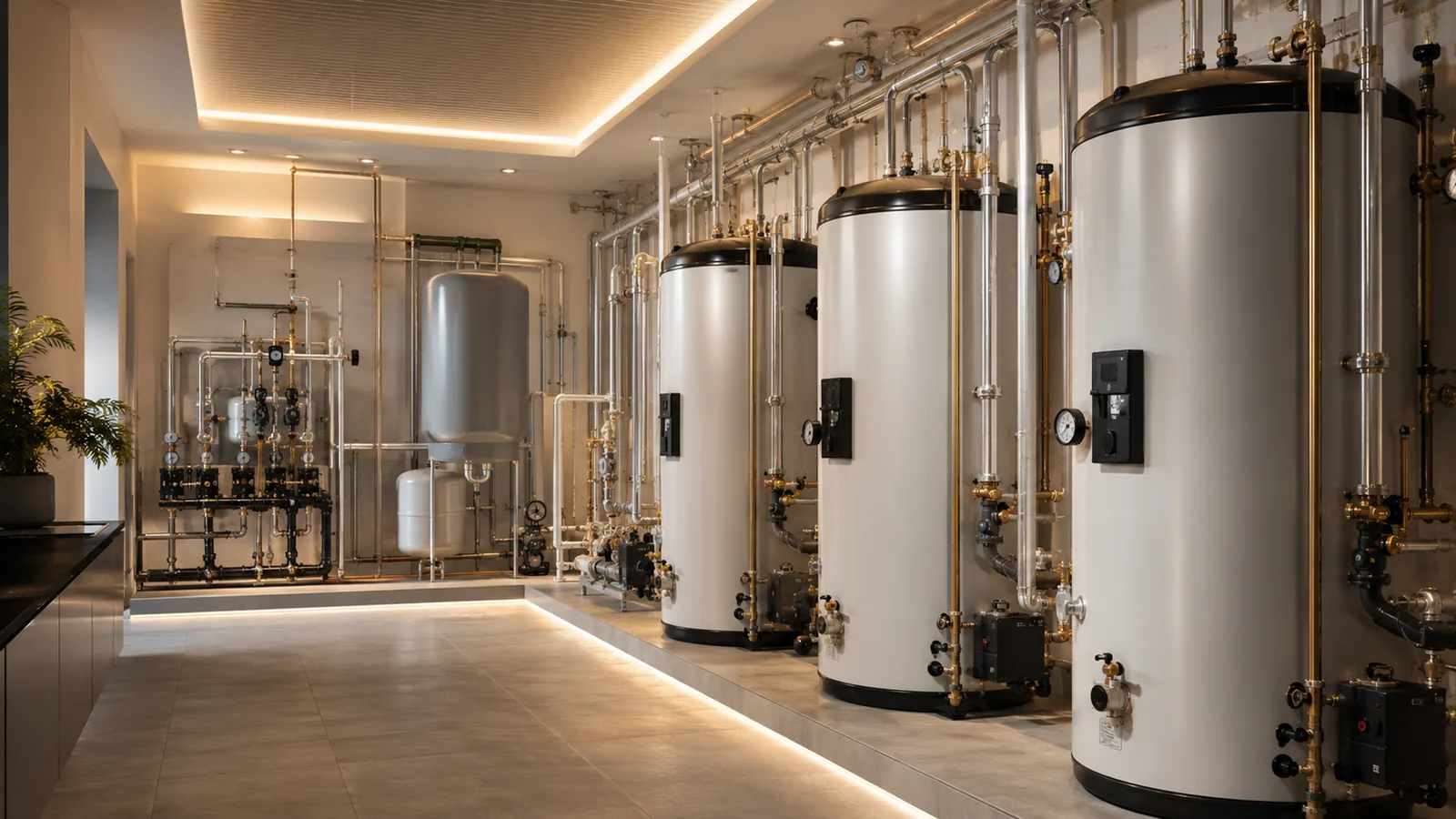
Checking safety group, valves, pressure, drainage and correct connection scheme.
Assessment of tank, heating elements, anode, scale, leaks and component service life.
Checking power supply, protection, connection heating, thermostats and correct modes.
What the survey includes
We check not only visible components, but also the hidden system logic: routes, loads, access, safety, finish-related risks and future operation.
- cold and hot water connection
- safety group and discharge
- check valves and pressure reducers
- expansion vessel and pressure
- tank and connection condition
- heating elements, thermostats and anode
- scale and signs of overheating
- leak and corrosion marks
- power line and protection
- contacts, terminals and connection heating
- grounding and safety
- operation of modes and indication
- what can be serviced
- what requires repair
- when equipment replacement is needed
- how to relocate nodes without finish risks
Instrument checks and records
The survey format is selected for the property. Where needed, we use video inspection, thermal imaging, measurements, photo records and analysis of existing schemes.
We check piping, valves, drainage, mounting and service access.
We assess operating pressure, discharge and leak risk during heating.
We check power supply, protection, contacts and signs of overheating.
We provide prioritized recommendations for maintenance, repair or replacement.
Where a survey is especially important
This diagnosis is needed where an engineering error is expensive: finishes, operation, deadlines and the project reputation.
Checking hidden engineering risks before finishing, purchase, renovation or rework.
Diagnostics of technical rooms, long routes, redundancy and interaction between systems.
Checking loads, water, sewerage, ventilation, electrical systems and downtime risks.
Special attention to humidity, condensation, safety, drainage and service access.
Checking comfort, noise, control nodes, hidden defects and readiness for operation.
Assessment of safety, marking, access, redundancy and clear operation.
How the survey is carried out
We follow a clear sequence: record the initial data, check the system, separate urgent risks from planned work and give the owner a clear picture.
We clarify the property type, symptoms, renovation stage, access to nodes, documents and finish-related limits.
We check accessible areas, technical rooms, shafts, cabinets, routes, equipment and actual assembly.
When required, we use a camera, thermal imager, measurements, test starts and operating-mode checks.
We separate visible symptoms from the cause: routing, equipment selection, installation, automation or operation.
We divide urgent risks, planned corrections and tasks that can be done during the next renovation stage.
We provide conclusions, photos, a defect list, recommendations and a clear structure for further work.
What the client receives
The survey result is not a set of general phrases, but a clear list of risks, priorities and technical actions.
Actual condition, identified defects, risks, causes and priorities for correction.
What to fix immediately, what to schedule, what to check further and which nodes to monitor.
Survey materials that can be shared with the owner, manager, designer or contractor.
Solutions for upgrade, repair, installation, access, automation and future maintenance.
Survey of water heaters, piping and safety
Tell us the property type, system and issue. We will suggest the survey format and the checks required.