
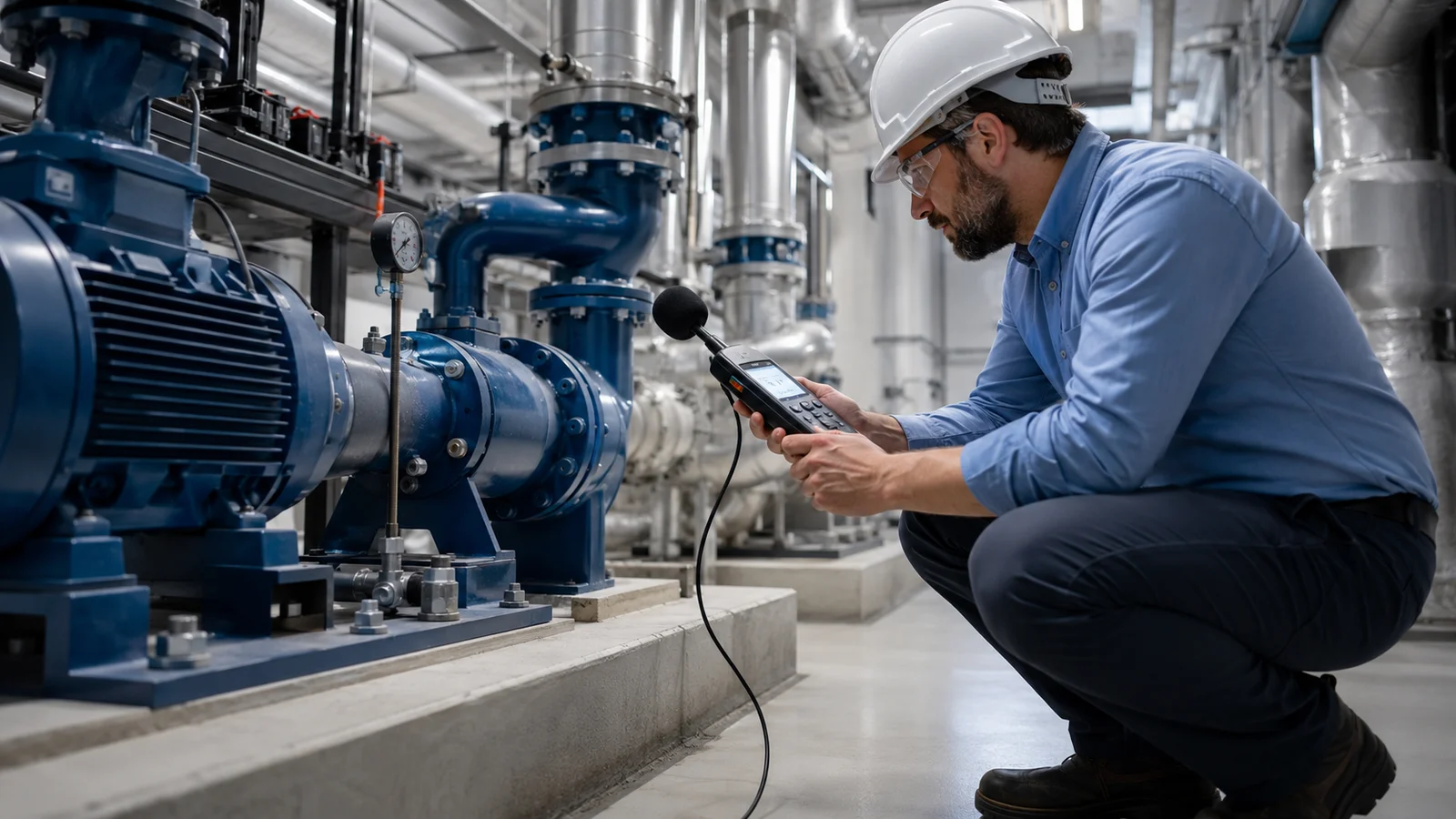
We determine whether noise comes from equipment, air or water velocity, valves, supports or vibration transmission into structures.
Special attention is given to bedrooms, studies, home cinemas, hotel rooms and other quiet zones.
Depending on the task, solutions may include operating adjustments, vibration isolation, flexible connections, acoustic measures or local redesign.
Scope of work
- Pumps, chillers, air-handling units, fan-coils, compressors and other engineering equipment.
- Pipework, valves, pressure reducers and noise caused by excessive water velocity.
- Ductwork, grilles, diffusers, silencers and aerodynamic noise.
- Transmission of vibration through supports, frames, slabs, walls and service shafts.
- Checks of night and reduced operating modes for residential and hospitality properties.
- Assessment of equipment condition, balancing and causes of excessive vibration.
- Selection of vibration-control and noise-reduction principles within the agreed engineering scope.
- Verification of the result after tuning or modernisation.
What the client receives
We separate airborne noise, structural vibration and hydraulic or aerodynamic sources.
We avoid unnecessary demolition where tuning or a local engineering modification can solve the problem.
Noise reduction must not compromise airflow, water flow or equipment reliability.
After corrections, the operating condition is rechecked against the original state.
Engineering acoustics, noise reduction and vibration isolation
We identify the source of engineering noise and vibration and address the cause at equipment, hydraulic, ductwork, mounting and operating-mode level instead of merely masking the symptom.